
Welcome to Volunt2Thai – Learn Thai by Living Thai
Welcome to Volunt2Thai – Learn Thai by Living Thai
Would you like to learn Thai in Thailand and experience the language not only in a classroom, but as part of everyday life?
At Volunt2Thai, you can learn Thai by using the language where it is actually spoken: in daily life, in local schools, on our campus and through direct interaction with Thai children, teachers and people from the local community.
Our Thai Language & Cultural Immersion Program combines language learning, cultural exchange and practical experience in a rural part of Northeast Thailand – Isan, far away from the usual tourist destinations.
You don't learn Thai only from a textbook. You hear the language every day, ask questions, try new words and use Thai in real situations.
Learn Thai by living Thai.
Learn Thai Through Real Interaction
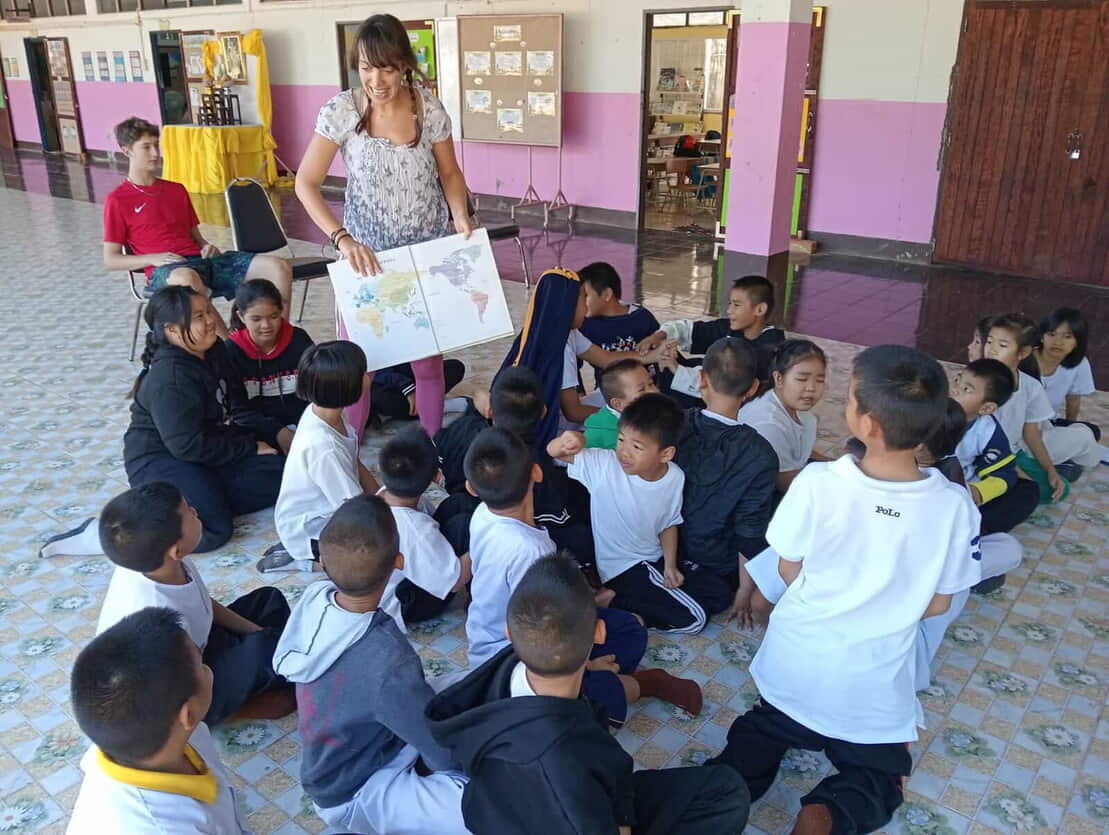
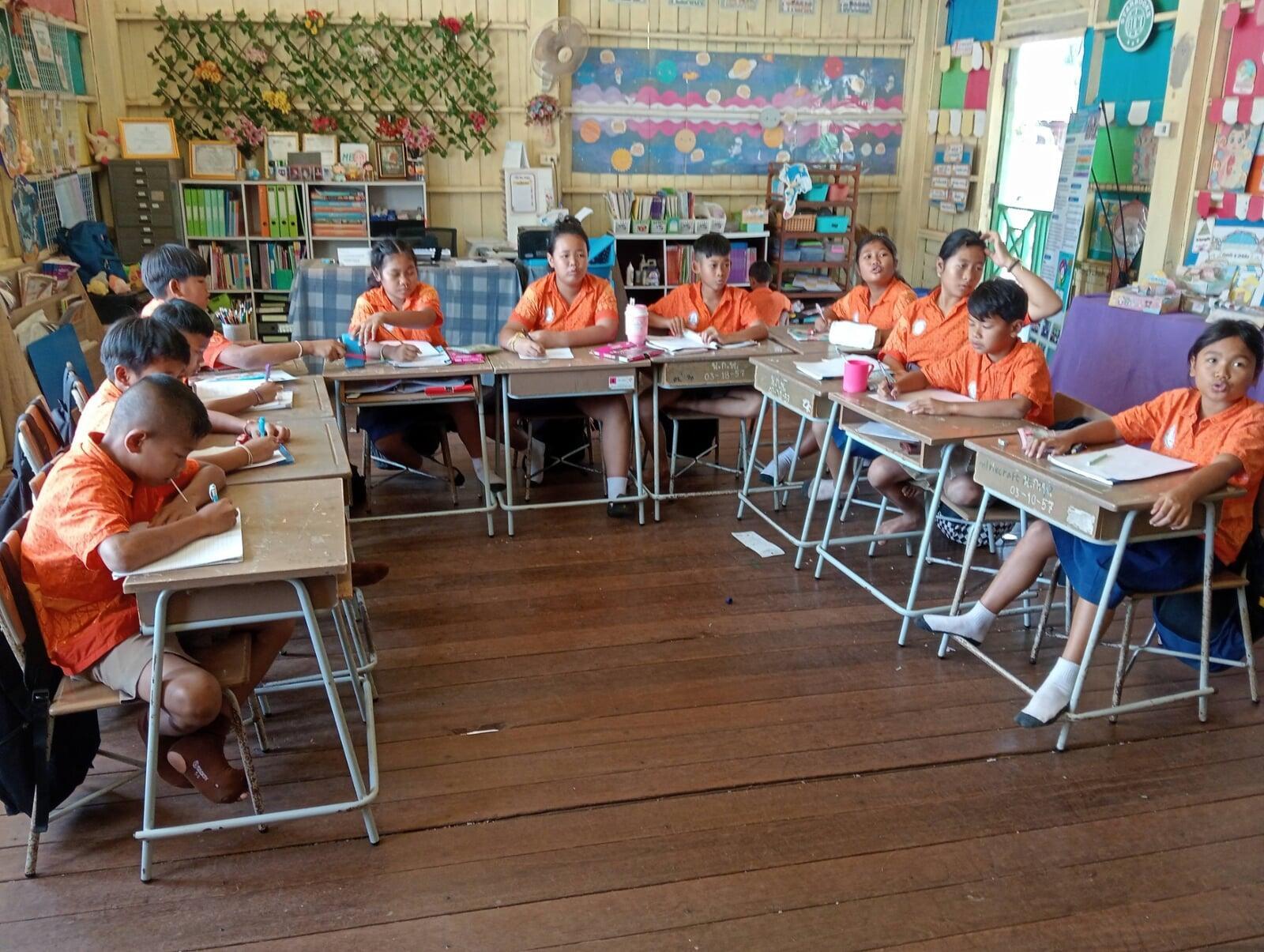
At Volunt2Thai, you spend time with Thai children in local schools, during sports and shared activities, and on our campus.
While helping the children learn English, you can learn Thai from them at the same time.
Even simple questions can become small Thai lessons:
“What is this called in Thai?”
“How do you say this in Thai?”
“How do I pronounce this word correctly?”
An animal, a food, an object, a movement or an everyday expression can become the starting point for a spontaneous Thai language lesson. This means that you don't learn words in isolation. You connect them with people, situations and real experiences.
Support from Experienced Interpreters
Thai can be challenging when you first start learning it. The language uses its own writing system, has a different structure from English and most European languages, and is a tonal language with five different tones.
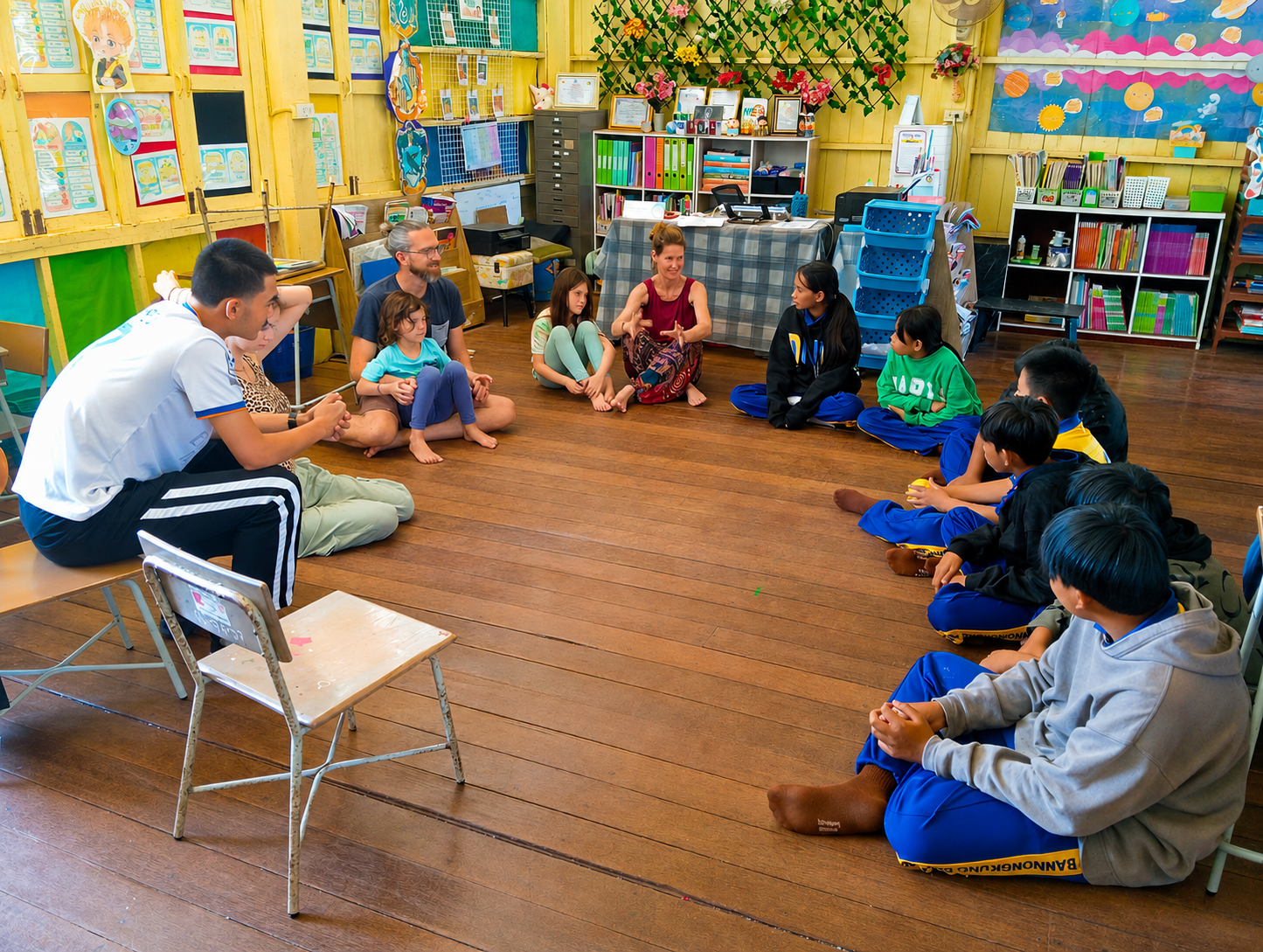
For this reason, you are supported by experienced interpreters during your time at Volunt2Thai.
This is particularly valuable in the beginning. They help you avoid misunderstandings and mistakes and show you shortcuts and connections that you might otherwise take a long time to discover on your own.
They can help you learn your first important Thai words and phrases, improve your pronunciation and communicate with teachers, children and people in the local community.
As your confidence grows, however, you will find that you need less assistance and can increasingly ask people yourself.
The Children Can Become Your Thai Teachers
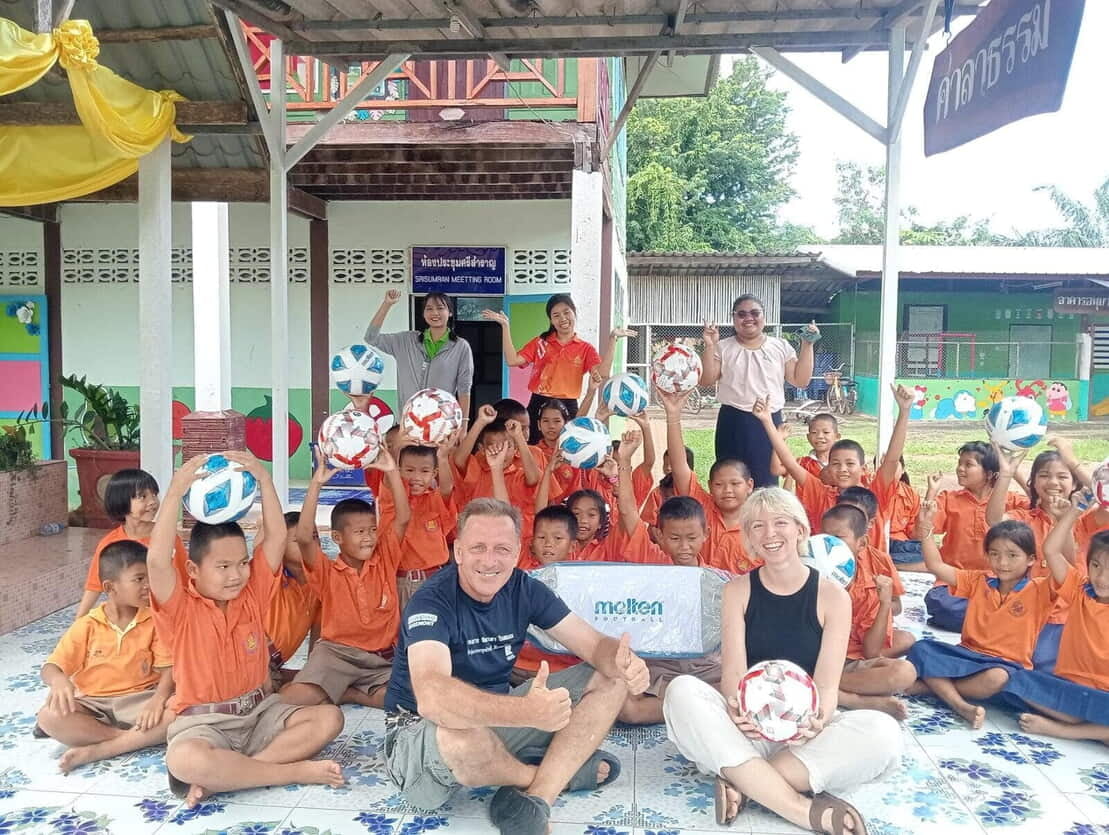
One of the special aspects of language exchange at Volunt2Thai is that the children themselves can become your Thai teachers.
When you ask them how to say a word in Thai and try to pronounce it yourself, a completely different kind of learning begins.
You are showing the children:
I am learning too. I make mistakes too. And I want to learn from you.
This creates mutual respect.
The children experience that their language and culture are interesting and valuable to someone from another country.
And you gain something that no textbook can fully provide: the opportunity to learn Thai from people who speak the language every day.
Learning Through Mistakes, Laughter and Curiosity
Mistakes are part of learning a language. This is true for children and adults alike.
You may pronounce a Thai word incorrectly at first. The children may laugh – and that can turn into a relaxed and enjoyable learning situation.
Some English words can also sound surprisingly similar to Thai words. These moments often create fun and laughter in the classroom.
But there is more to this than entertainment.
You don't have to speak perfect Thai to communicate – and the children don't have to speak perfect English to communicate with you.
Through this mutual learning process, both sides can become less afraid of making mistakes and more confident about using a foreign language.
Why English Can Be Challenging for Thai Children
Thai and English are very different languages.
They use different writing systems and differ significantly in pronunciation, sounds, sentence structure and grammar. Thai is also a tonal language, while English uses sounds, stress and intonation differently.
Many English sounds and consonant combinations do not exist in Thai. At the same time, people who speak English or another European language have to learn how Thai sounds and its five different tones work.
For a Thai child, learning English therefore means much more than memorizing new vocabulary.
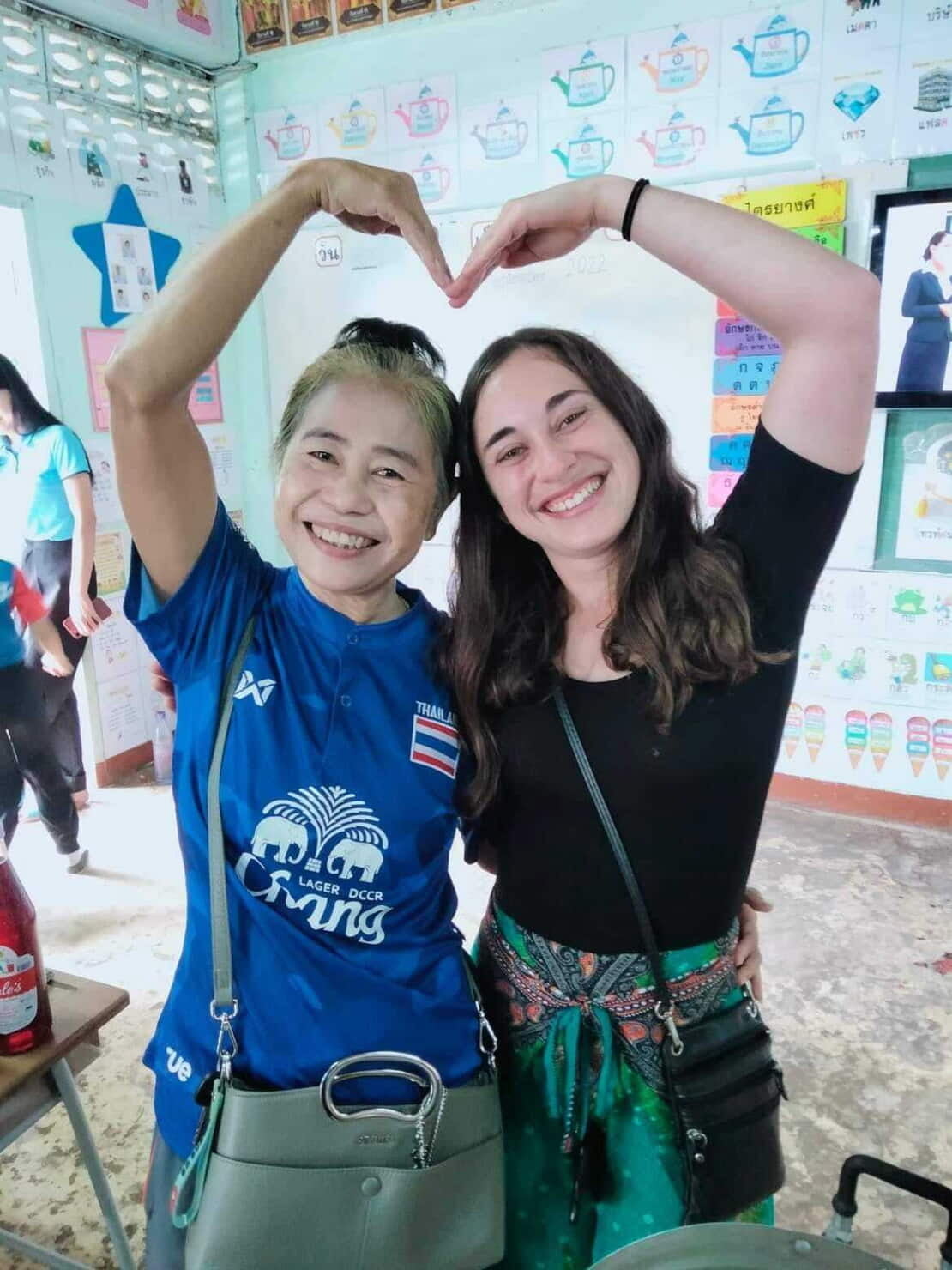
In rural areas, children may also have relatively few opportunities outside school to regularly communicate with English speakers. An international environment can therefore give them an opportunity not only to study English, but actually to use it.
This is where your English teaching and your own Thai learning come together.
You are not only the person bringing English – you are also someone learning a new language yourself.
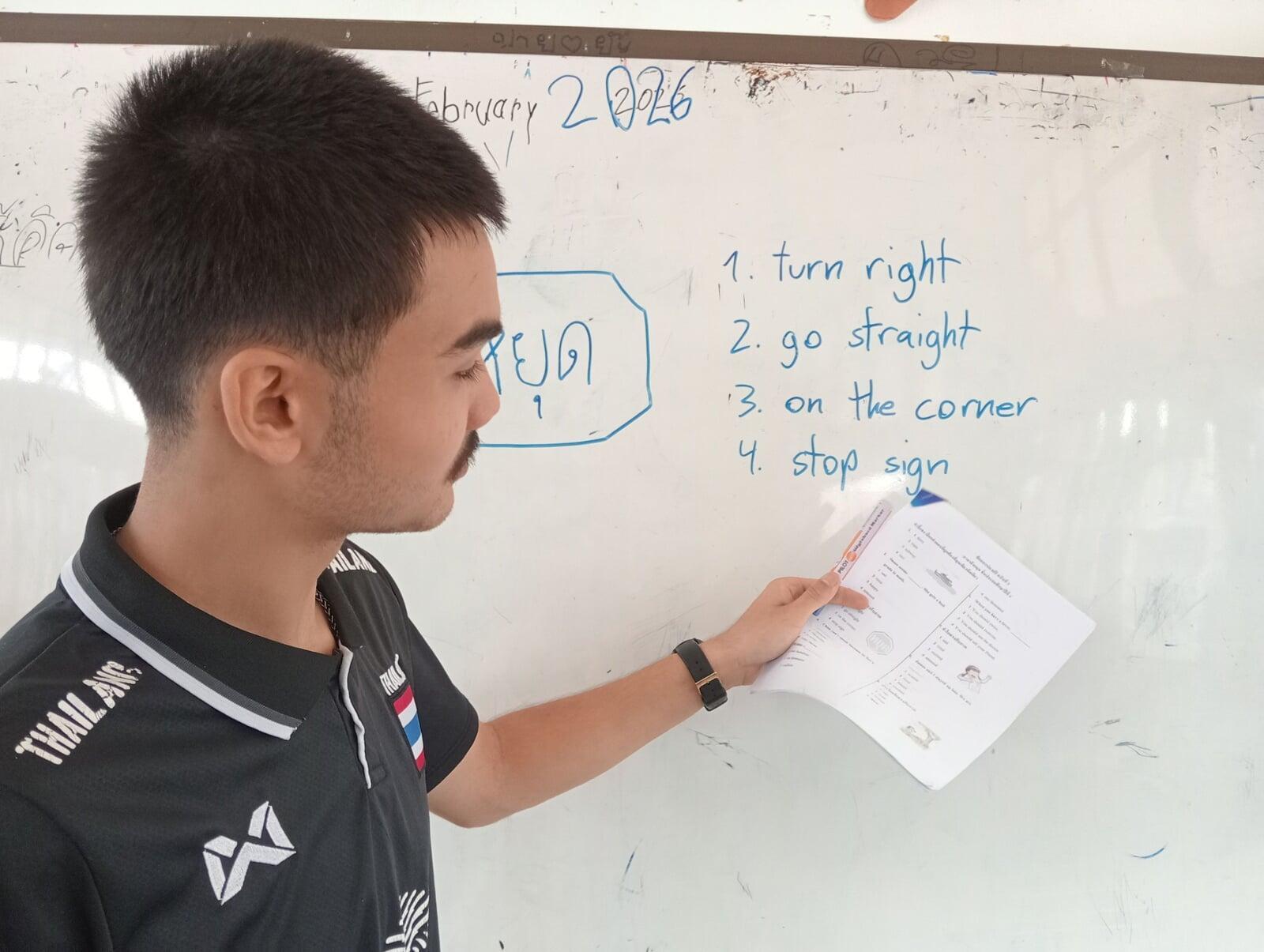
From a School Subject to Real Communication
When international participants and Thai children communicate with each other, the role of language changes.
English is no longer only a school subject.
Thai is no longer simply a language you study from a textbook.
Both languages become tools for real communication.
A language that may initially sound like gibberish to the children when they first hear a foreign visitor speaking can gradually become something meaningful, understandable and alive.
You ask questions, try to answer, repeat words, correct each other, laugh about mistakes and learn from one another.
This is what genuine language immersion in Thailand can be about.
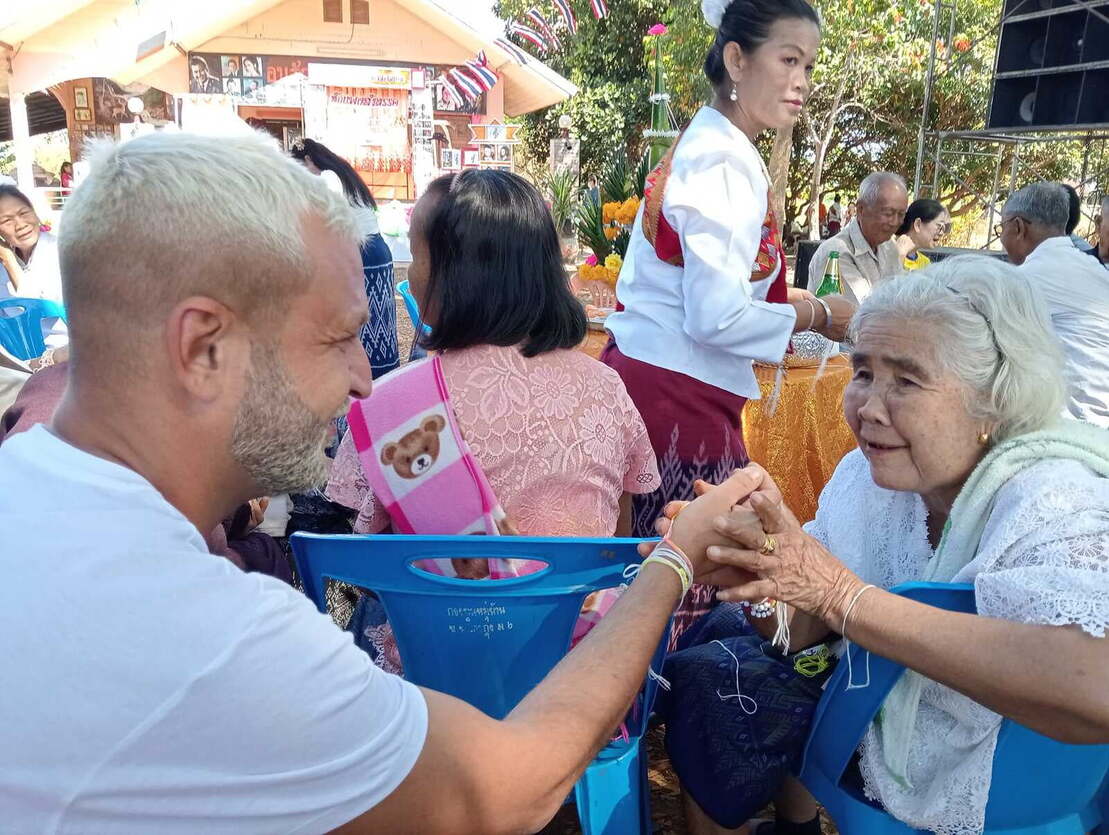
Learn Thai in Rural Thailand
Volunt2Thai is located in a rural area of Udon Thani in Northeast Thailand (Isan).
Here, you experience Thailand away from the country's main tourist centres.
There is no typical tourist infrastructure directly around the campus. Instead, you become familiar with a local community, visit local schools and gain insight into everyday life in a rural part of Thailand.
This environment is particularly interesting for learning Thai.
You don't hear Thai only during a language lesson. You encounter the language throughout everyday life.
You can use what you learn immediately while also discovering more about Thai culture, the local community and everyday life in the region.
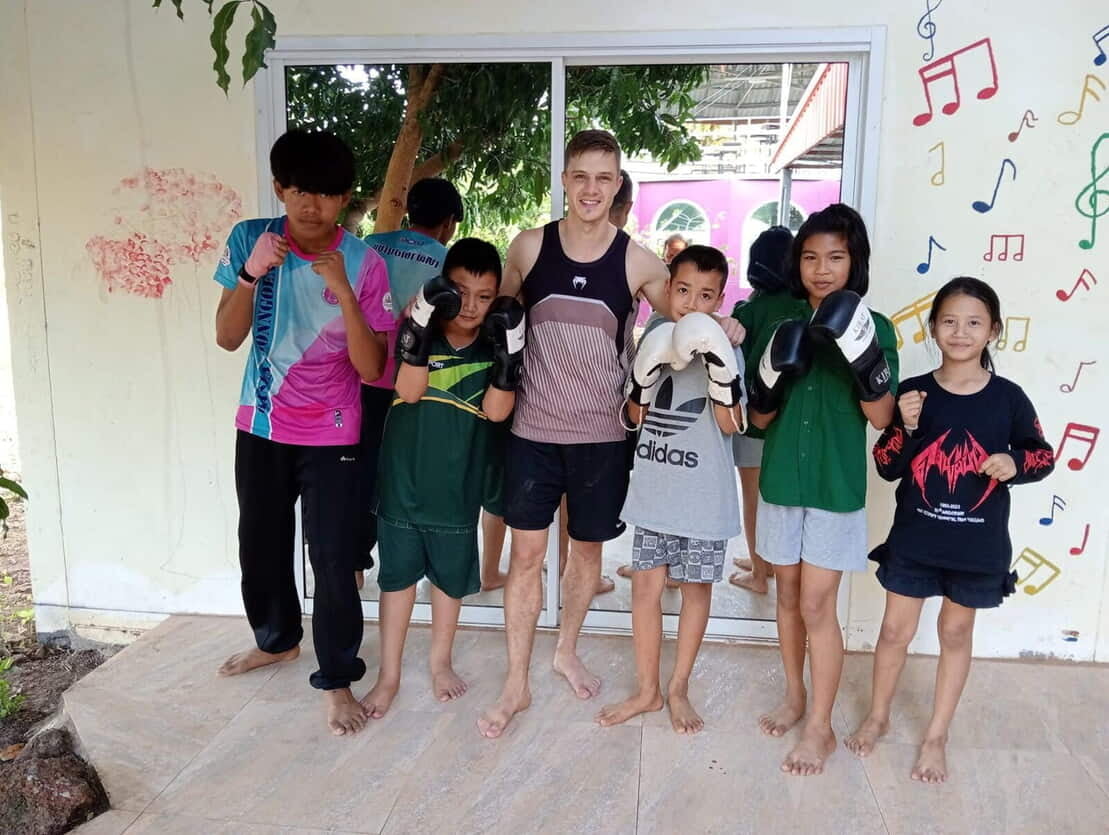
Learn Thai While Making a Contribution
If you join Volunt2Thai as a Project Participant, your stay is not limited to language learning.
You can contribute your own skills, interests and life experience while getting to know the local community.
Many participants support English activities in local schools, help with sports and creative activities, or contribute their own ideas and skills to the campus and community.
While you help the children learn English, they help you learn Thai.
You give something – and you receive something in return.
This mutual exchange is an important part of what we do.
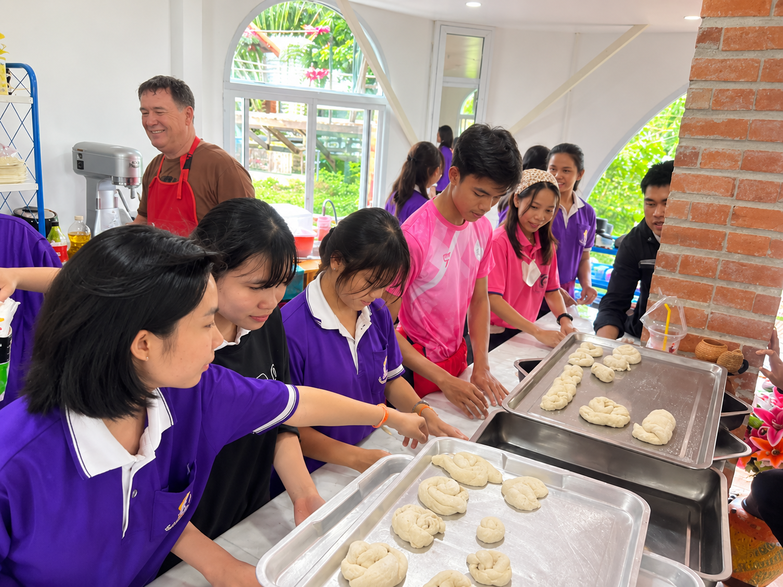
Learn Thai as a Starting Point for Further Language Study
A stay at Volunt2Thai can also be a useful first step if you would like to study Thai more intensively later.
Perhaps you want to take a Thai language course, live in Thailand for a longer period or eventually study Thai at a university.
Through daily contact with the language, you can develop an initial understanding of:
- Thai pronunciation and the five tones
- commonly used Thai words and expressions
- the sound and rhythm of the Thai language
- everyday communication
- cultural differences in communication
- how Thai is used in real-life situations
This can help you discover how you relate to the language and what kind of further Thai language study might suit your personal goals.
More Than a Language School
Volunt2Thai is not a conventional language school.
Our approach combines Thai language immersion, cultural exchange, community and practical experience.
You don't learn Thai exclusively from a textbook or exclusively from a teacher.
You learn through people.
Through children.
Through conversations.
Through mistakes.
Through laughter.
And through the everyday situations in which language is actually used.
Learn Thai in Thailand – and Experience Thailand
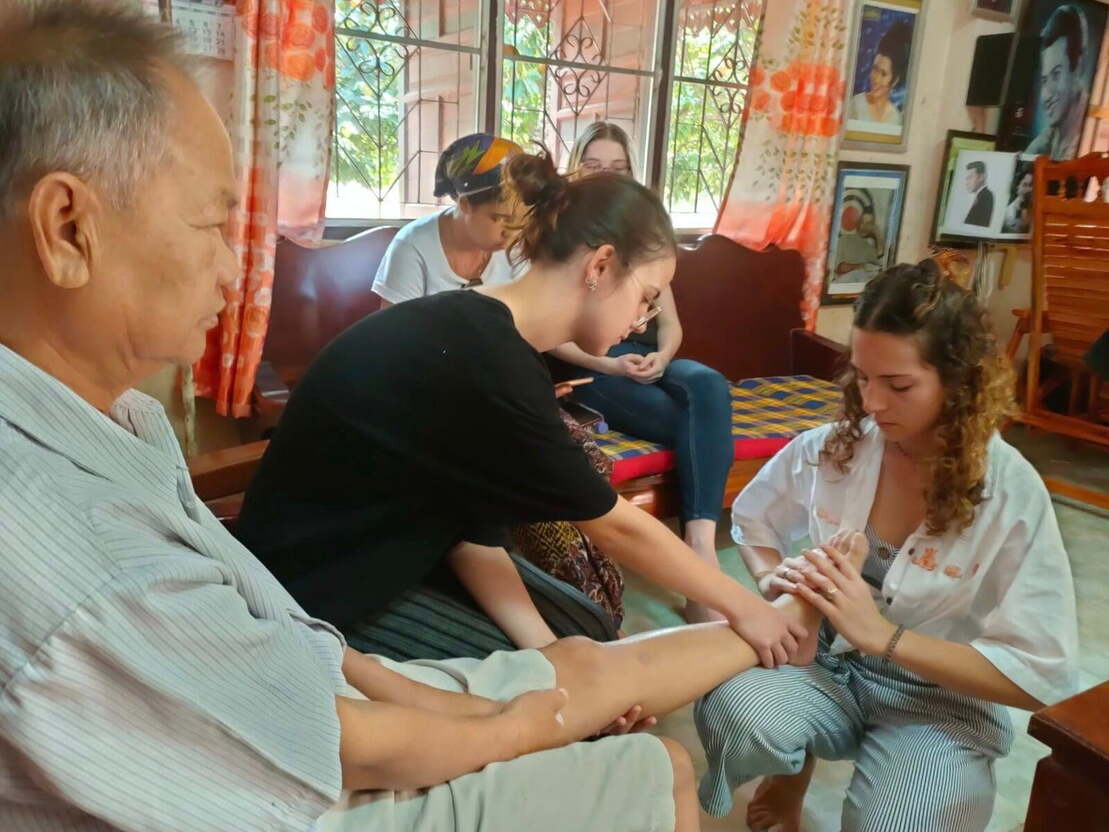
If you want to learn Thai in Thailand and are looking for more than a conventional language course, Volunt2Thai offers an opportunity to experience the language as part of everyday life.
You can learn Thai, gain international experience, meet Thai children and local community members, and at the same time contribute to educational activities in rural schools.
Don't just learn Thai from a book.
Speak Thai with the people who live the language.